Use Case
AI Executive Personal Assistant
A managing director with a full schedule of meetings across several time zones finds that the real cost is rarely the meetings themselves — it is the twenty minutes before each one spent remembering who the other party is, and the twenty minutes after spent writing down what was agreed. An AI persona built as a personal assistant sits in exactly that gap.
By EchoMP Editorial · Published 22 August 2026 · Updated 22 August 2026
The Scenario
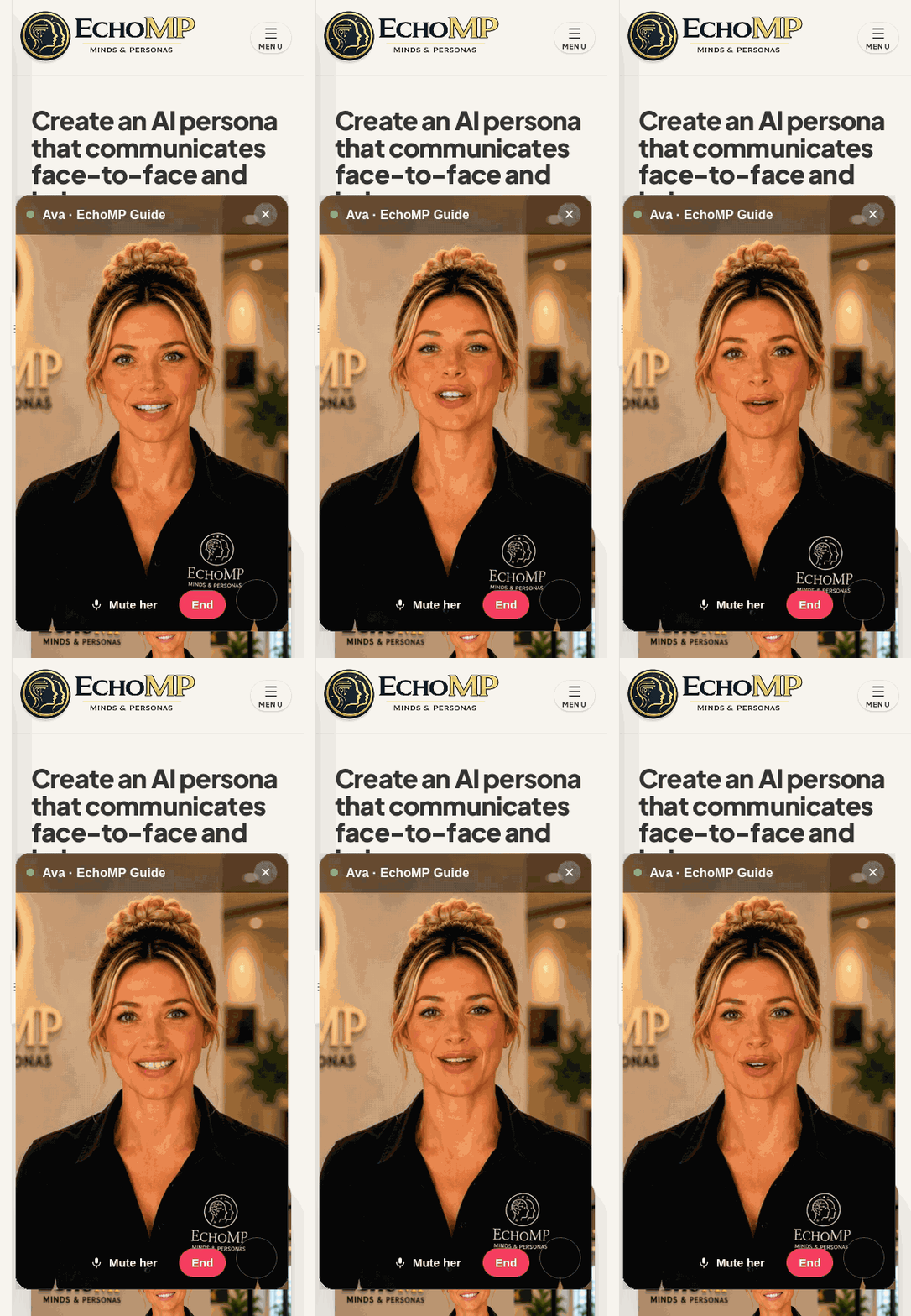
The persona is private. It is not embedded on a public website and not listed publicly — it is used by the executive and, where permitted, a small internal team. Each morning the executive opens a short live face-to-face interaction on a phone during the commute and asks what the day looks like.
The persona walks through the schedule, flags the two meetings that need preparation, notes that a board pack is still outstanding, and reads back the three commitments made yesterday that have not yet been closed.
How the Persona Is Set Up
Essentials
The role is defined as a discreet chief-of-staff style assistant: precise, brief, and comfortable saying that something is unknown. The personality is tuned toward short answers with the important item first, because most interactions happen while the executive is walking between things.
Knowledge
- Company structure, team names, and reporting lines
- Current quarter priorities and the language used to describe them
- Key client and partner background notes
- Standing travel and hospitality preferences
- Recurring meeting formats and what each one is for
- Communication rules — who is answered directly and who is routed to the team
Written well, this is the difference between an assistant that reads a calendar back and one that understands why Thursday afternoon should never be booked over.
Guided Sessions
A "Morning brief" session runs the schedule, the outstanding items, and the day's single most important outcome. A "Pre-meeting briefing" session covers who is attending, what was agreed last time, and what a good result looks like. An "End of day" session captures decisions, commitments, and anything that needs to move.
Skills
- Calendar read to see the current schedule
- Email read for the relevant thread before a meeting
- Meeting booking and rescheduling
- Zoom, Google Meet, and Microsoft Teams meeting link handling
- CRM lookup for client history
- Task or commitment tracking
The mechanics behind these are covered in knowledge, Skills, and agentic AI.
Joining the Meeting
The persona can be invited into a supported Google Meet, Zoom, or Microsoft Teams meeting. It appears as a participant with an AI marker on its display name, so no one is left guessing who they are speaking to.
In a group meeting it stays quiet unless it is addressed directly. When the executive asks for last quarter's figure or what was promised in the previous call, it answers from its knowledge, then returns to listening. Afterwards it produces the summary and the list of commitments.
The setup for this is described in share, embed, meetings, and earnings.
Boundaries Worth Setting
- No commitments made on the executive's behalf without confirmation
- No confidential figures repeated in a meeting with external attendees
- Drafts prepared, never sent, unless the executive approves
- Anything financial, legal, or personnel-related is flagged rather than answered
- Clear statement, on request, that the assistant is an AI persona
What the Executive Gets
The gain is not automation for its own sake. It is that the context which normally lives in one person's head — the history of a client, the promise made three weeks ago, the reason a meeting exists — is written down once and available on demand, in a thirty-second conversation instead of a search through email.
Related Use Cases
Build an assistant that already knows the context.
Give it your priorities, your people, and your preferences, then let it brief you before the meeting and write up what followed.